wtorek, 9 lutego 2016

Metal Gear Solid

Metal Gear Solid is an action-adventure stealth video game developed by Konami Computer Entertainment Japan and first published by Konami for the PlayStation in 1998. The game was directed, produced, and co-written by series creator Hideo Kojima, and serves as a sequel to the MSX2 video games Metal Gear and Metal Gear 2: Solid Snake, which Kojima also wrote and directed.

Metal Gear Solid follows Solid Snake, a soldier who infiltrates a nuclear weapons facility to neutralize the terrorist threat from FOXHOUND, a renegade special forces unit. Snake must liberate two hostages, the head of DARPA and the president of a major arms manufacturer, confront the terrorists, and stop them from launching a nuclear strike. Cinematic cutscenes were rendered using the in-game engine and graphics, and voice acting was used throughout the entire game.
Metal Gear Solid was well received, shipping more than six million copies, and scoring an average of 94/100 on the aggregate website Metacritic. It is regarded by many critics as one of the greatest and most important games of all time, and is often seen as the game which helped popularize the stealth genre. The commercial success of the title prompted the release of an expanded version for the PlayStation and PC, titled Metal Gear Solid: Integral; and a remake, Metal Gear Solid: The Twin Snakes was later released for the GameCube. The game has also spawned numerous sequels, prequels and spin-offs, including several games, a radio drama, comics, and novels.

Despite a transition to 3D, the gameplay of Metal Gear Solid remains similar to its 2D MSX2 predecessor Metal Gear 2: Solid Snake. The player must navigate the protagonist, Solid Snake, through the game's areas without being detected by enemies. Detection is triggered by the player moving into an enemy's field of vision and sets off an alarm that draws armed enemies to his location. This also triggers "alert mode" and the player must then hide and remain undetected, at which point “evasion mode” begins and once the counter reaches zero the game returns to "infiltration mode" where enemies are not suspicious of Snake’s presence. The radar cannot be used in alert or evasion mode.
To remain undetected, the player can perform techniques which make use of both Solid Snake's abilities and the environment, such as crawling under objects, using boxes as cover, ducking or hiding around walls, and making noise to distract enemies. These are carried out using the third-person camera, which often changes its angle to give the player the best view of the area possible, and an on-screen radar, which displays enemies and their field of vision. Snake can also make use of many items and gadgets, such as infra-red goggles or a cardboard box disguise. The emphasis on stealth promotes a less violent form of gameplay, as fights against large groups of enemies will often result in serious damage for the player.

The game's progress is punctuated by cutscenes and codec, as well as encounters with bosses. To progress, players must discover the weaknesses of each boss and defeat them. Play controls and strategies can also be accessed via the Codec radio, where advice is delivered from Snake's support team; for example, the support team may chastise Snake for not saving his progress often enough, or explain his combat moves in terms of which buttons to press on the gamepad. The Codec is also used to provide exposition on the game's backstory. Completion of the title provides the player with a statistical summary of their performance, and a "code name" based upon it, typically the name of a common animal.
In a first for the Metal Gear series, a training mode, called VR Mode, is available in which players can practice hiding techniques, weapon use, and sneaking. In addition to the stealth gameplay, there are set piece sequences that entail firefights between the player and enemies from the third-person and first-person perspectives.

Undertale

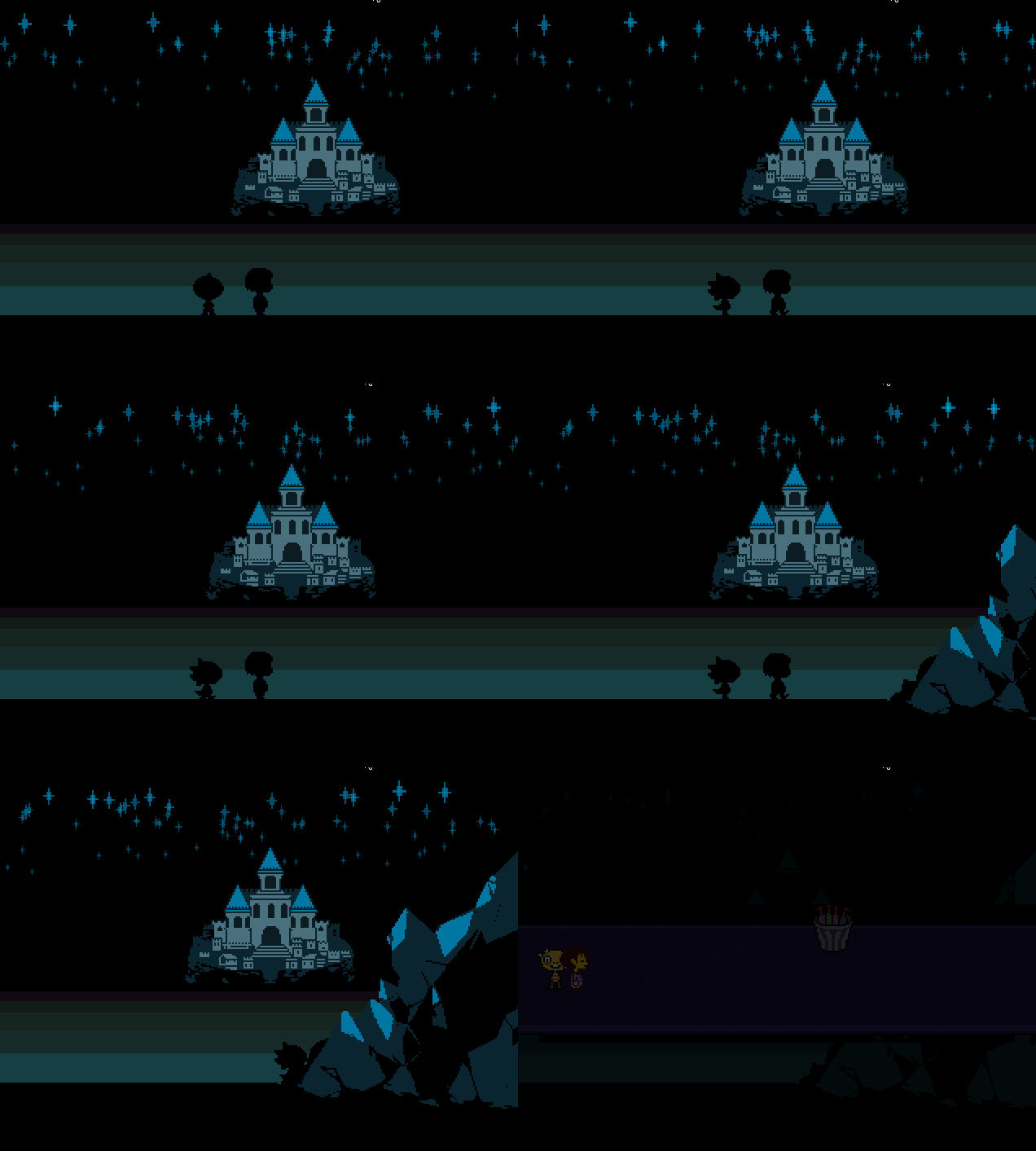
Undertale (also stylized as UnderTale or UNDERTALE) is a roleplaying video game developed and published by indie developer tobyfox. The game was written, designed, and composed for by creator Toby Fox, with additional artwork by Temmie Chang, and was released for Microsoft Windows and OS X on 15 September 2015.

In Undertale, the player controls a human child navigating the fictional Underground: a large, secluded region underneath the surface of the Earth. The inhabitants of the Underground are called "monsters", a diverse and intelligent group who have been banished from the surface following a war with humanity. The child interacts with many monsters on the child's quest to return to the surface, with the player making decisions on whether to kill or befriend them. These choices affect the outcome of the game to a large degree, with the dialogue and story outcome changing based on their decisions.
The game received acclaim from video game critics, with particular praise for its writing and characters. Reviewers enjoyed the game's intuitive combat system, the contrast of its witty humor with a dark story, breaking the fourth wall, as well as its references to older role-playing games.

Undertale features traditional role-playing mechanics, such as experience points, an overworld, equipment, and health, though with several differences. The game casts players in the role of a child as they explore an underground world full of monsters who they can either kill or befriend. The overworld lets the player navigate in a top-down perspective, visiting locations such as towns, shops, and large buildings. Progression through the game requires interacting with puzzles and non-player characters, moving forward through locales. Save points appear frequently in the overworld, refilling the player's health while saving the player's progress.

During battles, the player controls a small heart which represents the protagonist's soul and must avoid attacks unleashed by the opposing monster—in a similar fashion to a bullet hell. As the game progresses, new elements are introduced, such as colored obstacles which require the player to stand still or move through them, and boss battles which change the way the heart is controlled. The player may choose to attack the enemy, which involves timed button presses, earning EXP and gold for defeating them. Alternatively, they can use the ACT option to perform non-violent actions, which vary depending on the enemy. If the player uses the right actions to respond to the enemy, they can choose to spare them and end the fight without killing them—earning no EXP. The game features various story branches and endings depending on whether the player chooses to kill or spare their enemies, and it is possible to clear the game without killing a single enemy.

Monsters will converse with the player during battle, and the game will tell the player about how they're feeling or what they're doing. The monsters' attacks will change in ferocity based on how the player interacts with them, being easier if the player chooses non-violent options, or harder if the player chooses to fight. If the player fights a boss character on a second playthrough, their dialogue will change based on the player's actions in previous playthroughs, including whether they appear at all. The final boss of Undertale is different based on whether the player killed no monsters, some monsters, or all monsters.

Valkyria Chronicles

Valkyria Chronicles  is a tactical role-playing game developed and published by Sega for the PlayStation 3 in 2008.The game is set in Europa, loosely based on Europe during the early years of World War II. Because of its abundance of Ragnite ore, which takes the place of petroleum in the game setting, the neutral nation of Gallia comes under attack from the East Europan Imperial Alliance, which is itself engaged in a war with the Atlantic Federation. Players take control of a unit of the Gallian Militia, dedicated to repelling the invasion. The game's visuals, which use Sega's CANVAS graphics engine, resemble pencil drawn paintings in motion.

Valkyria Chronicles is a tactical role-playing game in which the player uses a unique turn-based battle system called BLiTZ (Battle of Live Tactical Zones). During their turn the player views an overhead map in Command Mode, but zooms in to control each individual unit on the battlefield in Action Mode. Much like the Growlanser series, movement and other actions are handled in real time during Action Mode, though limited in movement by an action point (AP) gauge that varies for each type of character. During Target Mode, the player is in direct control of characters' aim while the action freezes, allowing for head shots and other maneuvers. Taking command of individual units during the player's phase costs Command Points, which can be used dynamically to grant movement to many different units or the same unit consecutively with diminishing AP reserve, depending on what the player wants to accomplish. By using their troops the player must fulfill various conditions depending on the mission in order to achieve victory, most often the capture of a major enemy encampment. Upon completing missions, the player is awarded money and experience with which to upgrade their materiel and character classes, respectively, and the game's story is advanced. Missions can be failed if the player's forces are wholly incapacitated or killed, the squad's main battle tank is destroyed, or the player's main base camp is captured by the enemy.


Each character in the game fulfills a specific role — for instance, Alicia is a mid-range rifle-toting scout, while Welkin is a tank commander. Other roles include Shocktroopers (assault infantry), "Lancers" specializing in anti-tank warfare, snipers, and engineers. These various units form a rock-paper-scissors dynamic of strength and weakness. The foot soldiers (Scout, Shocktrooper, and Sniper) are effective against slower anti-tank units, anti-tank units can quickly destroy tanks with a well-aimed shot, and tanks are generally devastating against infantry, whose anti-personnel weapons are unable to inflict any significant frontal damage. While each character within a class is basically similar in terms of weaponry and statistics, each individual has a distinguishing set of Potentials: special abilities or stat modifiers triggered by various psychological or environmental factors in battle.
The environment also factors heavily in combat. In an urban level, for example, snipers can be sent onto rooftops to eliminate unsuspecting enemies below. Tanks can knock down walls and other obstacles to open new paths. Buildings and other structures offer hard cover around which to maneuver. Foliage offers soft cover to reduce the chance of being spotted by the enemy and to confound their aim when seen. As the Gallian forces advance across the battlefield, control points can be captured, giving the player a tactical advantage and offering additional locations in which to call reinforcements. As Welkin, the player can issue various Orders for the purpose of things such as artillery strikes, supervising medics, and improving offensive or defensive capabilities of various characters.